

 Academic Frontier
Cell | Nanoparticles Hijack Brain Immune Cells for Central Nervous System Drug Delivery and Stroke Therapy
QQ Academic Group: 1092348845
Detailed
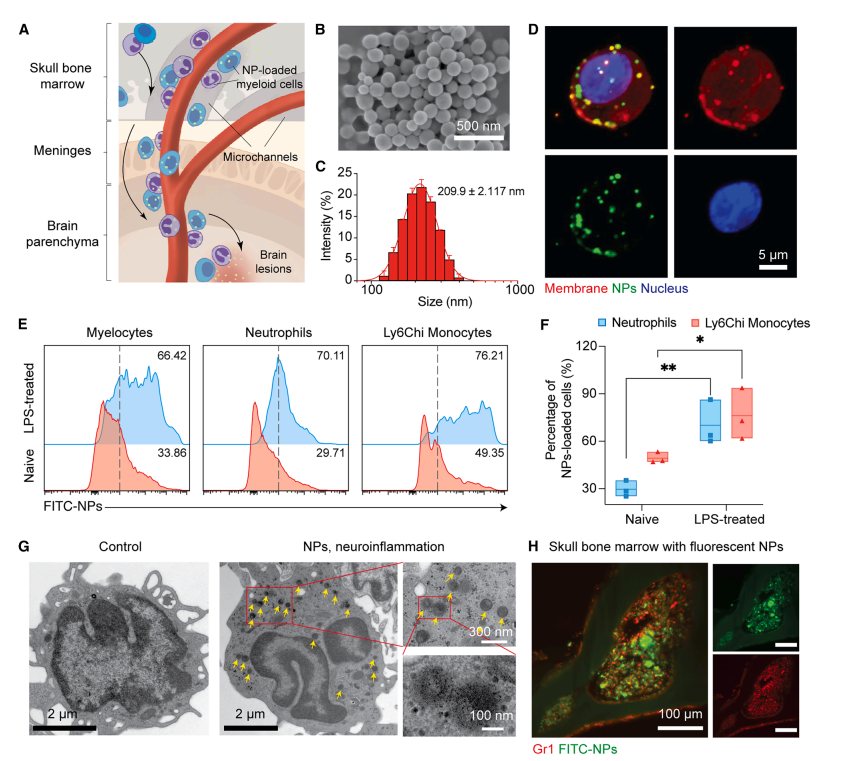
In principle, the rapid accessibility of intracranial immune cells to the brain could provide a transformative opportunity to overcome drug delivery barriers in central nervous system (CNS) diseases. We hijacked skull immune cells using drug-loaded nanoparticles (NPs) and utilized their unique skull-meningeal microchannel migration mechanism to bypass the blood-brain barrier (BBB) for CNS drug delivery.We constructed NP-loaded immune cells in situ via intracranial (ICO) injection, and verified their rapid migration in response to central nervous system disturbances, as well as their targeted therapeutic delivery to CNS lesions. Compared with traditional delivery methods, this strategy achieved promising therapeutic outcomes in improving both short-term and long-term results in preclinical stroke models. Our prospective clinical trials further support the translational feasibility of the ICO immune pathway in treating severe stroke. These findings establish skull-based delivery as a promising and clinically translatable route for CNS drug administration, and highlight immune-assisted transport as a potential transformative strategy for improving outcomes in neurological disease therapy.

Recently, the journal Cell published a breakthrough study proposing a novel central nervous system (CNS) drug delivery strategy. By "hijacking" immune cells in the skull, this approach enables drug delivery that bypasses the blood-brain barrier (BBB) and precisely targets brain lesions, opening a new path for the treatment of stroke and other neurological diseases.
Reference News:
DOI: 10.1016/j.cell.2025.12.008
- Previous: Advanced Materials | S
- Next: Advanced Science | Imm


