

 Academic Frontier
Cell | Multimodal supramolecular targeting chimeras enable spatiotemporal protein degradation in vivo
QQ Academic Group: 1092348845
Detailed
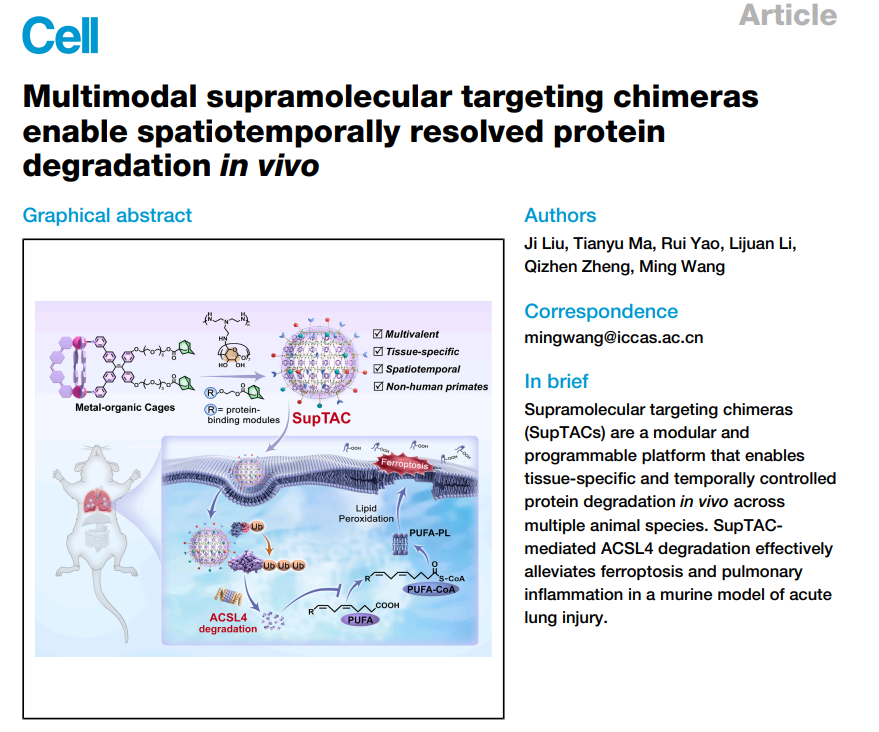
Targeted protein degradation (TPD) has transformed strategies for regulating protein function in basic biology and therapeutic development. However, existing approaches often lack the spatial and temporal precision required for in vivo applications. Here, we report supramolecular targeting chimeras (SupTACs), a modular and programmable platform capable of achieving tissue-specific and temporally controlled protein degradation. SupTACs self-assemble into supramolecular nanoparticles (SNPs) that co-localize target-binding ligands and E3 ligase recruiters, thereby promoting proteasomal degradation through the multivalent proximity of the supramolecules. This strategy achieves robust and tissue-specific degradation across multiple species, including non-human primates, with specificity in the liver and lungs. As a proof of concept, using SupTACs to specifically degrade acyl-CoA synthetase long-chain family member 4 (ACSL4) effectively alleviates ferroptosis and lung inflammation in a mouse model of acute lung injury. By integrating modularity, tissue specificity, and temporal control, SupTACs establish a versatile platform for precise protein degradation, enabling the exploration of dynamic signaling networks and the development of targeted therapeutics.
 Reference News:
DOI: 10.1016/j.cell.2025.12.007
- Previous: Nature Nanotechnology
- Next: Advanced Science | Imm


