

 Academic Frontier
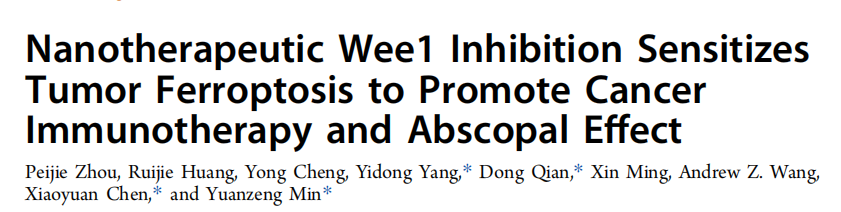
ACS Nano | Nanotherapy: Wee1 Inhibition Sensitizes Tumors to Ferroptosis, Enhances Cancer Immunotherapy and Abscopal Effects
QQ Academic Group: 1092348845
Detailed
The main problem with cancer immunotherapy is its low response rate. Therefore, developing therapies that enhance immune responses is urgently needed. Tumor ferroptosis can lead to immunogenic cancer cell death, which may improve cancer immunotherapy. However, current ferroptosis inducers might be limited to cancer cells with specific genetic backgrounds. Consequently, sensitization to ferroptosis inducers is highly sought after. Here, we found that Wee1 expression negatively correlates with drug sensitivity and positively correlates with an immunosuppressive microenvironment. Further studies indicate that Wee1 inhibition can induce ferroptosis and alter iron homeostasis regardless of p53 status. Our in vitro results suggest that Wee1 inhibition induces ferroptosis in cancer cells via mitochondrial reactive oxygen species and unstable iron-dependent pathways. To minimize side effects, we developed an acid-responsive nanomedicine for Wee1 inhibition that can sensitize tumors to ferroptosis in vivo and enhance responses to cancer immunotherapy. In combination with immunotherapy, nanomedicine-mediated Wee1 inhibition also induces an abscopal effect, curing up to 55% of mice, which has never been observed before. In summary, nanomedicine-based Wee1 inhibition sensitizes tumors to ferroptosis, enhancing cancer immunotherapy and abscopal effects.
- Previous: Nature Nanotechnology
- Next: Advanced Science | Imm


