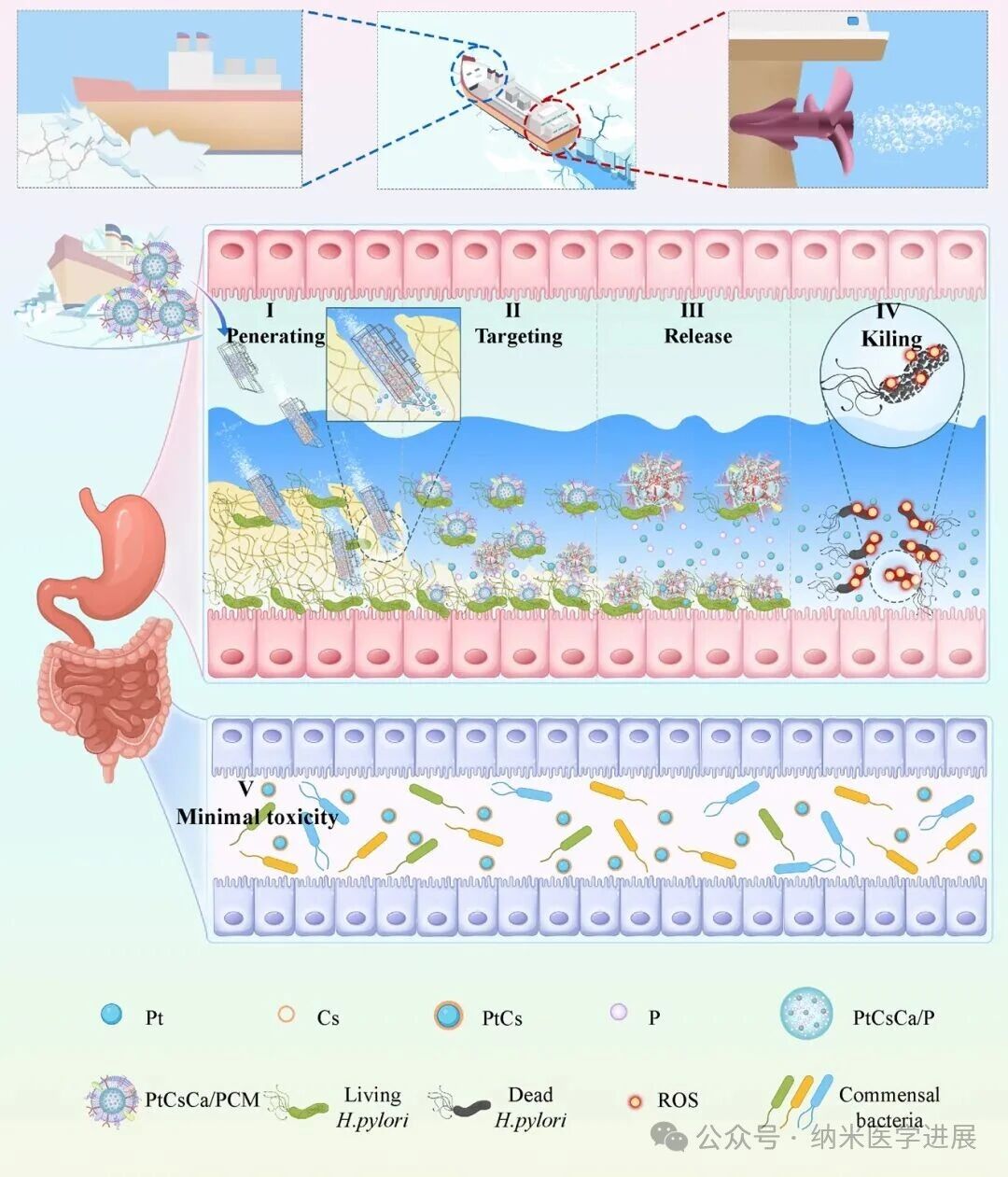
 Research Background
Helicobacter pylori (H. pylori) infection is the main cause of serious gastric diseases, and 89% of gastric cancer cases worldwide are related to it. Due to the rising antibiotic resistance, the success rate of eradication has sharply declined. The use of bio-material antibacterial agents has become a potential strategy to address the challenge of antibiotic resistance. Current antibiotic therapy faces many clinical problems: the gastric mucus layer hinders drug penetration, conventional drugs lack targeting and have the drawback of "broad-spectrum attack", the highly acidic gastric environment and the reduced drug bioavailability due to gastric emptying, and long-term use can also damage the intestinal microecology. Therefore, a new treatment strategy is urgently needed. The research team led by Huang Yu and Yang Shiming from the Army Medical University, in collaboration with Professor Xing Mengqiu from the University of Manitoba, drew inspiration from icebreaker ships and constructed a bioengineering micro-robot (PtCsCa/PCM) targeting H. pylori. This system integrates the gastric epithelial cell membrane (targeting function), calcium carbonate particles (power support), lysozyme (reducing resistance), chitosan (increasing retention concentration), and platinum nanozymes (non-resistant bactericidal), which can penetrate the gastric mucus layer, precisely identify bacteria, and kill H. pylori in an acidic environment by generating ROS, and its activity is suppressed in the neutral intestinal environment to protect the balance of the bacterial community. Mouse experiments showed that it could significantly reduce bacterial load, alleviate inflammation, and has good biocompatibility, providing a highly promising alternative strategy for antibiotic-free eradication of H. pylori.
This chapter is not yet complete. For the next part, please click: https://mp.weixin.qq.com/s/cYfdaSDm4Z3FVkUFpYPsAA Source: Advances in Nanomedicine