已传文件:photo/1794193202.png
 Nucleobases, the fundamental building blocks of DNA and RNA, undergo diverse chemical modifications and damage, regulating genomic stability, epigenetic states and cellular functions. Nucleobase-editing enzymes, including deaminases, methyltransferases/demethylases and DNA glycosylases, catalyze precise base conversion, modification/demodification or excision reactions with high resolution without inducing double-strand breaks. Initially investigated for transcriptome diversification, epigenetic regulation and DNA repair, these enzymes are increasingly repurposed as programmable actuators for biosensing and bioimaging applications. This review first outlines the catalytic principles of representative nucleobase-editing enzymes, focusing on substrate recognition, reaction mechanisms and physiological functions. We then highlight how these enzymes are integrated into biosensing and bioimaging modules via three major modes: nucleobase conversion, where site-specific deamination enables efficient reporter fluorescent protein translation or specific DNA probe hybridization signals; nucleobase modification/demodification, in which methylation and demethylation events regulate downstream selective enzymatic catalysis or programmed functional nucleic acid activation; and nucleobase excision, where glycosylase-mediated base excision facilitates tailored probe adaptation or highly efficient enzyme-catalyzed amplification. Such nucleobase-editing enzyme-driven systems feature high specificity, robust amplification and excellent compatibility with physiological conditions, enabling sensitive, spatiotemporally resolved monitoring of nucleic acids, proteins and cellular processes. Finally, we discuss the advantages, challenges and future directions of this emerging field. Advances in enzyme engineering, delivery strategies and multi-circuit integration are expected to give rise to next-generation bioanalytical platforms with enhanced precision, scalability and clinical translatability. Collectively, these developments establish nucleobase-editing enzymes as a versatile molecular toolbox bridging fundamental enzymology and applied biotechnology for diagnostics, therapeutic monitoring and synthetic biology.
This study was published in Chemical Society Reviews under the title “High-performance bioimaging and biosensing via nucleobase-editing enzymes”.
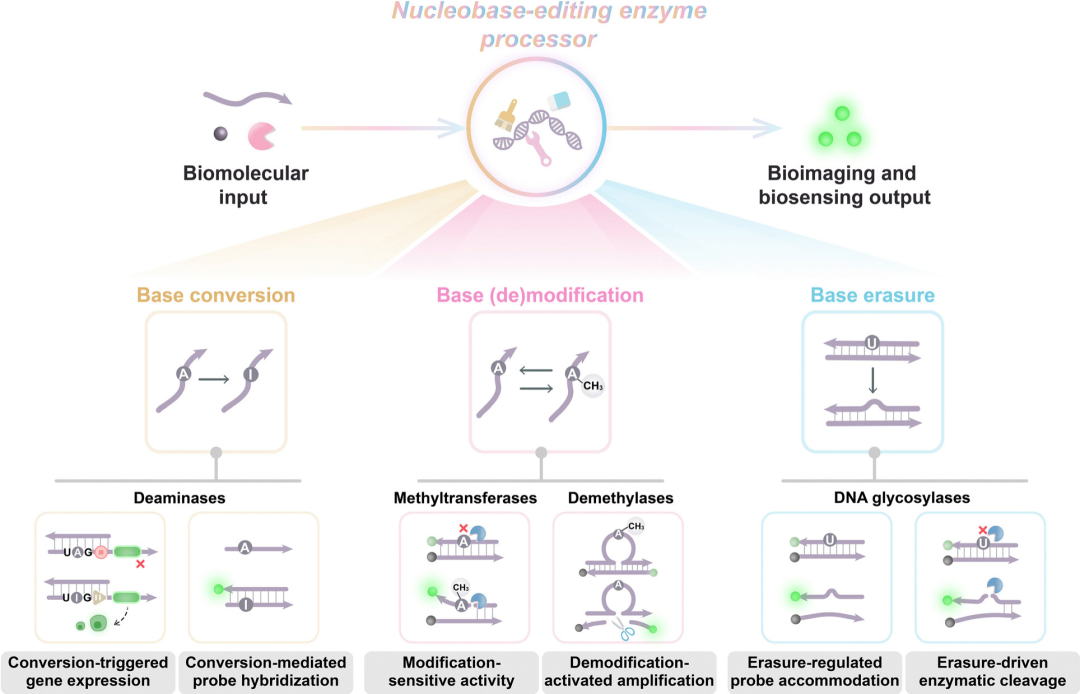 Figure 1
The fundamental reaction principles underlying these diverse nucleobase-editing enzyme-mediated bioimaging and biosensing applications are primarily driven by nucleobase conversion, nucleobase modification/demodification, and nucleobase excision.
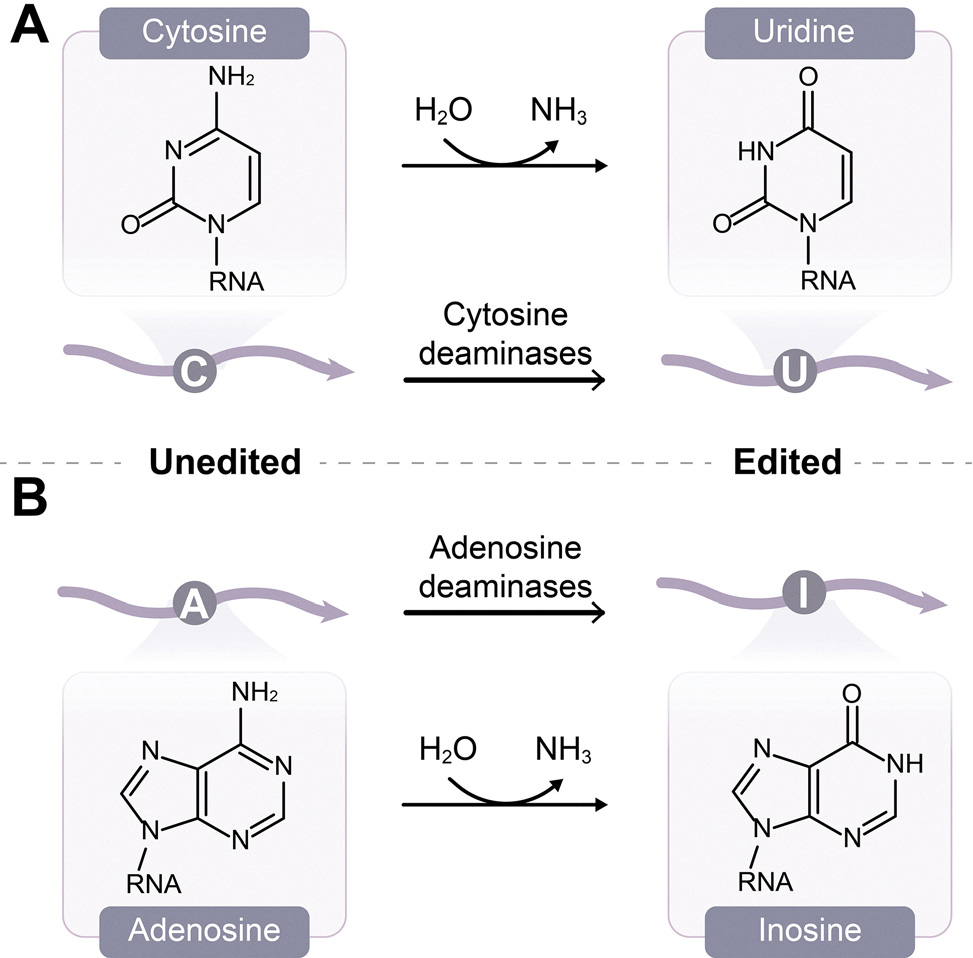
Figure 2
Nucleobase conversion by deaminases. (A) Cytosine deaminase catalyzes the hydrolytic deamination of cytosine to produce uracil (C-to-U), with ammonia released as a by‑product. (B) Adenosine deaminase catalyzes the hydrolytic deamination of adenosine (A-to-I), and ammonia is released during the reaction.
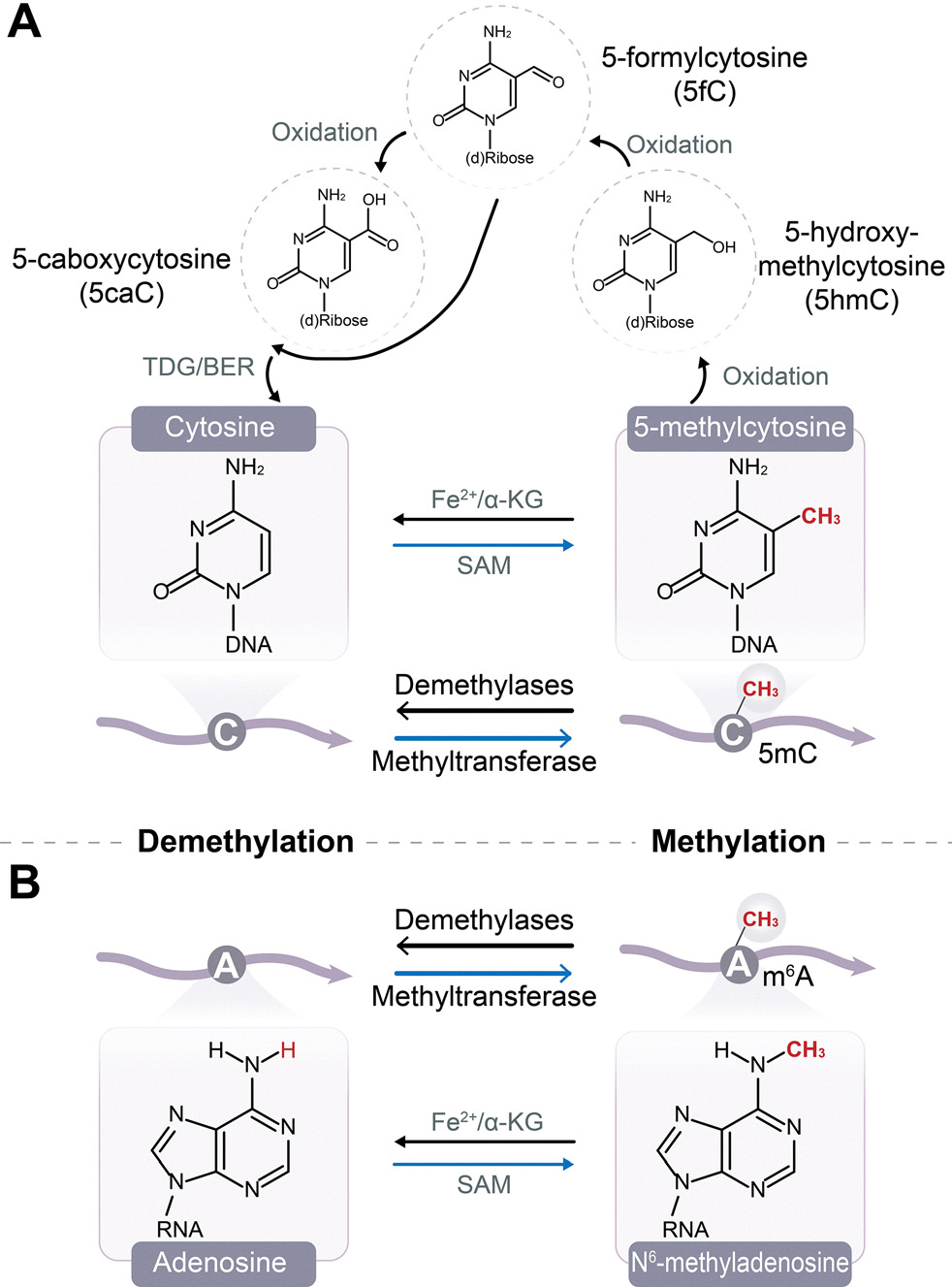
Figure 3
Nucleobase modification and demodification by methyltransferases and demethylases. (A) Methyltransferases and demethylases catalyze the modification and demodification of cytosine in DNA. (B) Methyltransferases and demethylases catalyze the modification and demodification of adenosine in RNA.
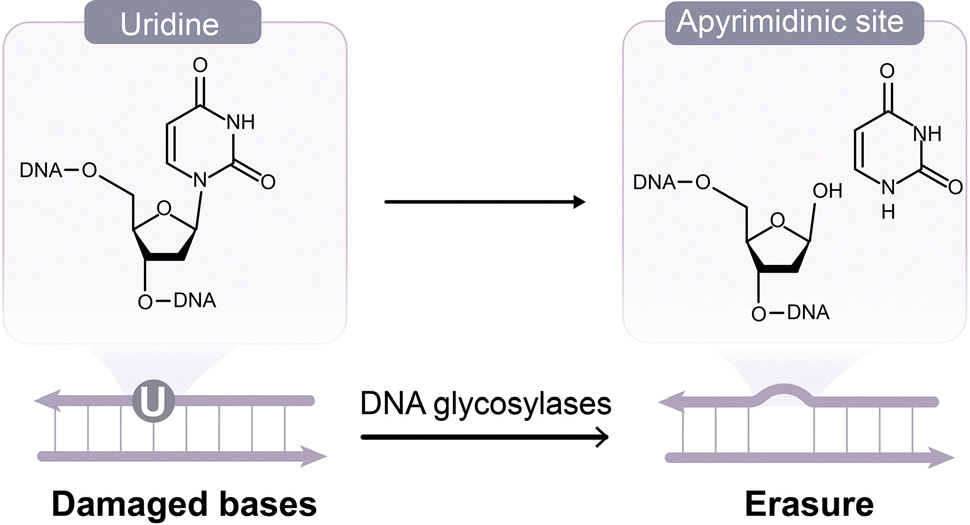
Figure 4
Nucleobase excision by DNA glycosylases. DNA glycosylases recognize and remove damaged bases to generate AP sites.
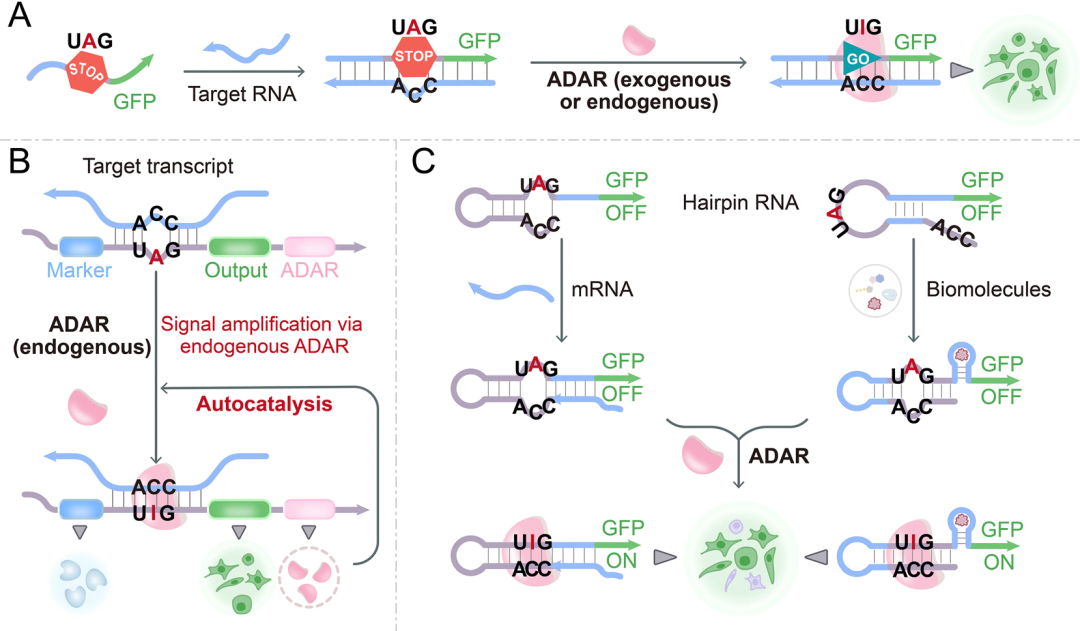
Figure 5
Rapid reporter gene expression induced by nucleobase conversion for RNA sensing. (A) Schematic illustration of the RNA-sensing method relying on adenosine deaminase acting on RNA (RADAR). ADAR edits adenosine to inosine and converts stop codons in protein reporter transcripts. Reprinted with permission from ref. 85, copyright 2022, Springer Nature. (B) Schematic of the autocatalytic circuit, in which endogenous ADAR edits stop codons to drive overactive ADAR2 expression for feedback reporter output. Reprinted with permission from ref. 86, copyright 2023, Springer Nature. (C) Hairpin-based ADAR sensors for imaging diverse biomolecules. Target binding activates hairpins bearing ADAR editing sites, enabling A-to-I editing at stop codons and subsequent reporter translation for the detection of RNAs, proteins or small molecules. GFP: green fluorescent protein. Reprinted with permission from ref. 87, copyright 2024, Oxford University Press.
Summary
Focusing on the catalytic properties of nucleobase-editing enzymes, three types of reactions including deamination, methylation/demethylation and glycosylase-mediated excision are converted into detectable signals. Through rational design of substrate recognition and reaction mechanisms, nucleobase conversion, modification/demodification and nucleobase excision are coupled to fluorescence reporting, probe hybridization, functional nucleic acid activation and signal amplification modules. This enables highly specific, physiologically compatible spatiotemporal monitoring of nucleic acids, proteins and cellular processes.
Synergistic optimization targeting enzyme engineering, delivery strategies and multi-circuit integration is proposed to improve editing precision, reduce off-target effects and enhance reliability in complex systems. These advances drive nucleobase-editing enzymes from fundamental enzymology tools toward programmable bioanalytical platforms, offering a more precise and scalable molecular toolbox for diagnostics, monitoring and synthetic biology.
References:
DOI: 10.1039/d5cs00678c
We specialize in custom nano-medical functional materials. We conduct targeted development to tailor structure, particle size and surface modification for your experiments. Full characterization, iterative optimization and technical support are available for targeted delivery, bioimaging and nanomedicine studies. Send your evaluation plans to us.
Engineer Zhang: 17715390137
Engineer Chen: 18914047343