已传文件:photo/1794878975.png
 Frontiers in Biomedical Materials
The tumor microenvironment (TME) plays a critical role in tumor initiation, proliferation, invasion and metastasis. Accordingly, it is urgent to develop antitumor strategies with multi-mechanism synergistic effects. Copper is widely used for tumor chemodynamic therapy (CDT) owing to its efficient laser-triggered photo-Fenton-like reaction. Furthermore, copper can induce cuproptosis, a novel cell death pathway distinct from previously known death mechanisms, which holds great promise for cancer treatment. Herein, we report a carrier-free injectable hydrogel based on natural small molecules (NCTD hydrogel). It is self-assembled from glycyrrhizic acid (GA) and norcantharidin (NCTD) under Cu²⁺ mediation, with the assembly mainly driven by coordination bonds and hydrogen bonds. Under 808 nm laser irradiation, the NCTD hydrogel generates reactive oxygen species (ROS), depletes glutathione (GSH) and alleviates hypoxia in the TME, thereby synergistically remodeling the TME via apoptosis, cuproptosis and anti-inflammatory effects. Moreover, the CDT mediated by the NCTD hydrogel features high selectivity and favorable biocompatibility, as it relies on the weakly acidic environment and overexpressed H₂O₂ within the TME. Notably, the building blocks of the NCTD hydrogel are derived from clinically available drugs. The fabrication process is simple, eco-friendly, cost-effective and free of additional excipients. This work presents an innovative carrier-free hydrogel-based synergistic antitumor strategy, which shows promising potential for industrial production and clinical translation.

This study was published in Bioactive Materials under the title “A metal ions-mediated natural small molecules carrier-free injectable hydrogel achieving laser-mediated photo-Fenton-like anticancer therapy by synergy apoptosis/cuproptosis/anti-inflammation”.
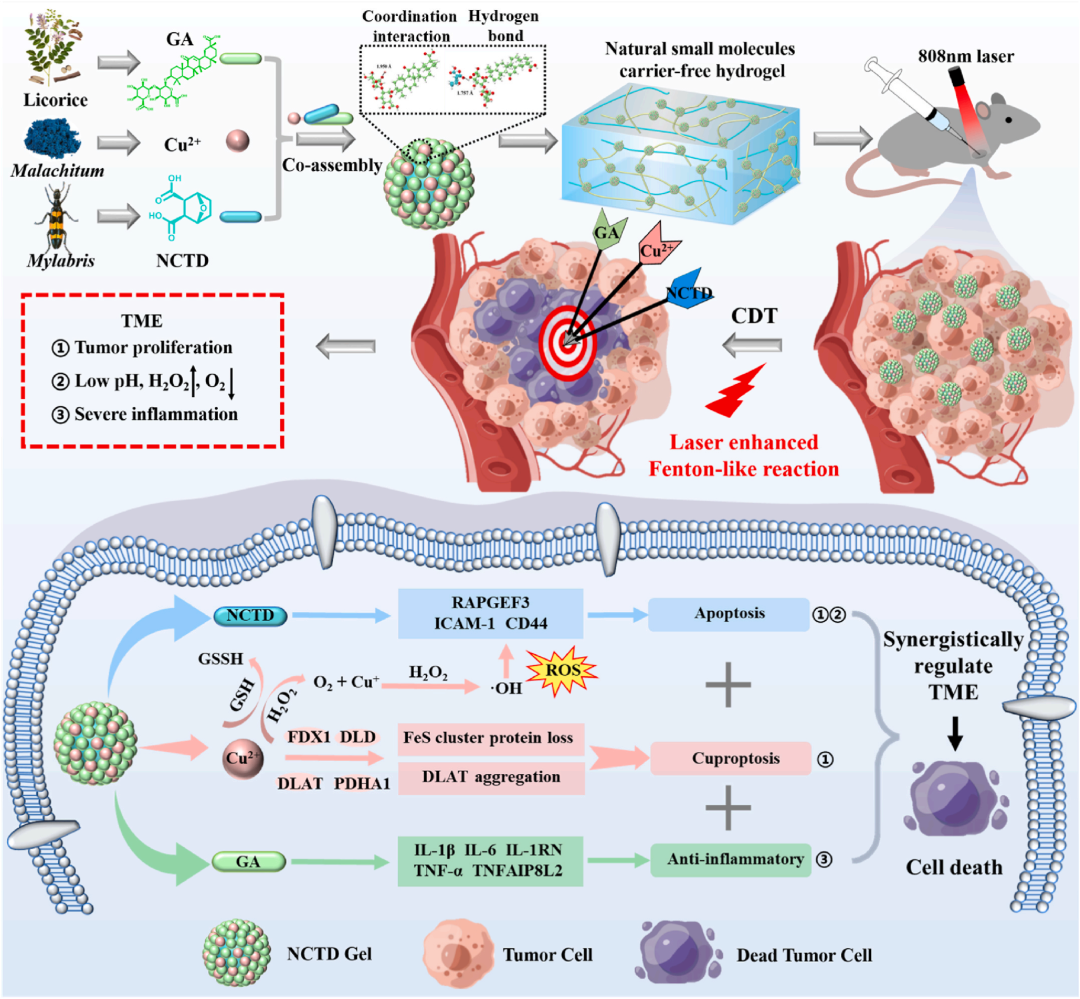
Figure 1
Schematic illustration of the self-assembly mechanism of NCTD hydrogel and its synergistic regulation of the tumor microenvironment via apoptosis, cuproptosis and anti-inflammation.
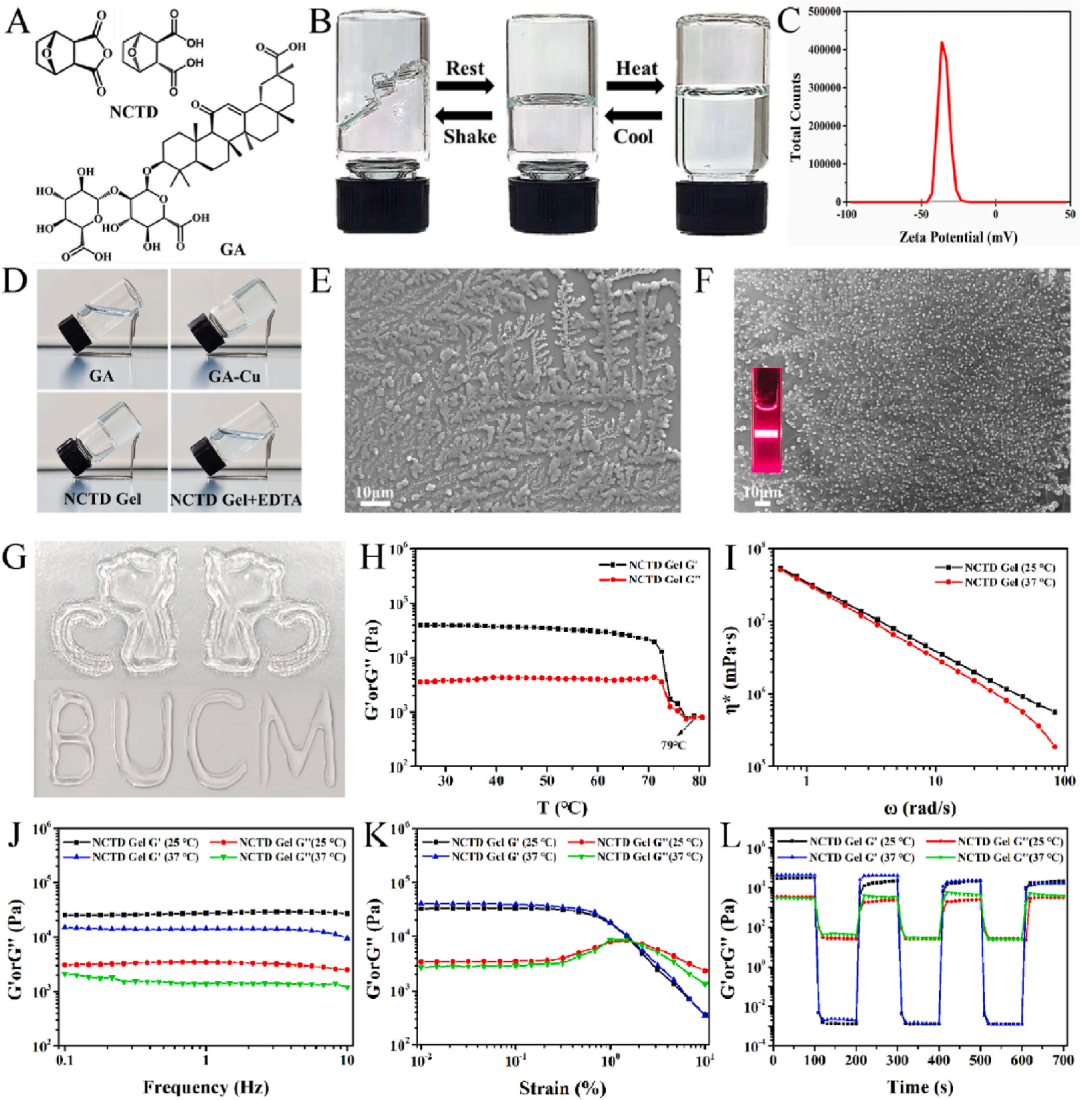
Figure 2
Characterization of NCTD hydrogel. (A) Chemical structures of NCTD and GA. (B) Reversible gel‑sol transition of NCTD hydrogel triggered by shear stress and temperature. (C) Zeta potential of NCTD hydrogel. (D) FTIR spectra of GA alone, and GA with sequential addition of Cu²⁺, NCTD and EDTA. (E) SEM image of GA‑Cu hydrogel. (F) Tyndall effect and SEM images of NCTD hydrogel. (G) Photographs demonstrating the injectability and plasticity of NCTD hydrogel. (H) Rheological analysis of NCTD hydrogel as a function of temperature. (I) Viscosity measurement of NCTD hydrogel at 0.1% strain. (J) Dynamic frequency sweep of NCTD hydrogel performed at 0.1% strain. (K) Strain‑dependent oscillatory shear rheology of NCTD hydrogel at 1 Hz. (L) Step‑strain measurement of NCTD hydrogel at 1 Hz under low strain (0.1%) and high strain (300%).
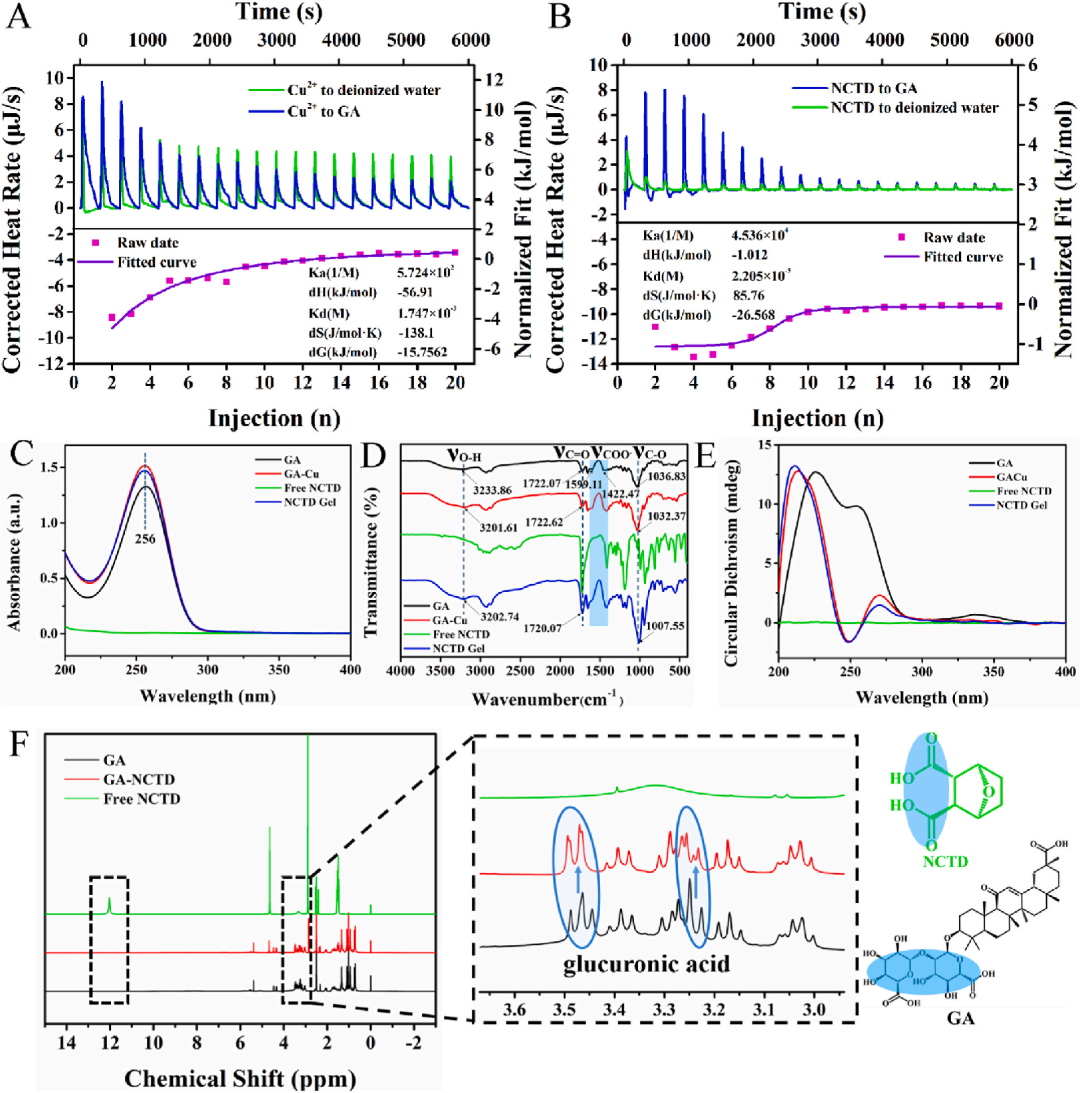
Figure 3
Self-assembly mechanism of NCTD hydrogel. (A) Fitted curves of raw isothermal titration calorimetry (ITC) data and thermodynamic parameters for Cu²⁺ titration into GA. (B) ITC data for titration of NCTD into GA. (C) UV‑vis spectra, (D) FT‑IR spectra and (E) CD spectra of GA, GA‑Cu, free NCTD and NCTD hydrogel. (F) ¹H‑NMR spectra of GA, GA‑NCTD and free NCTD.
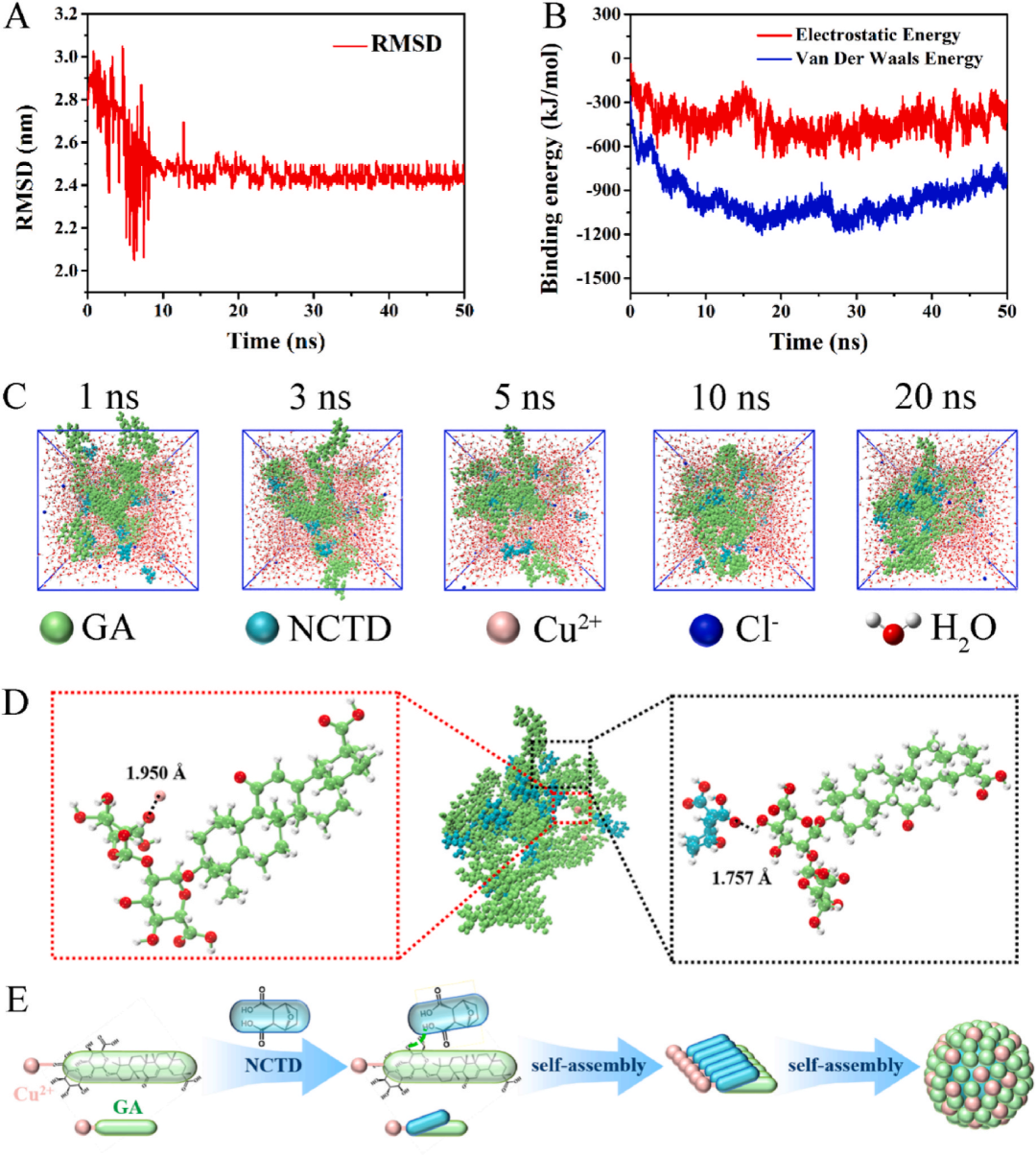
Figure 4
MD simulation of NCTD hydrogel. (A) Time-dependent RMSD variation during self-assembly. (B) Electrostatic energy and van der Waals energy during self-assembly. (C) Structural changes of NCTD hydrogel at 1, 3, 5, 10 and 20 ns. (D) Self-assembled structure and intermolecular interactions of NCTD hydrogel at the stable state (20 ns). (E) Schematic mechanism diagram for the self-assembly of NCTD hydrogel.
Summary
Targeting the weakly acidic, H₂O₂‑rich and hypoxic features of the tumor microenvironment, the authors break away from conventional polymer crosslinking strategies. Glycyrrhizic acid, norcantharidin and copper ions are adopted to construct carrier‑free injectable hydrogels via one‑pot self‑assembly driven by metal coordination and hydrogen bonding. Hydrogels assembled entirely from natural small molecules avoid the metabolic burden caused by exogenous excipients. Upon 808 nm laser irradiation, multiple synergistic therapeutic pathways are activated: copper ions catalyze the generation of oxygen and free radicals, deplete glutathione and induce cuproptosis. Combined with the intrinsic pro‑apoptotic and anti‑inflammatory effects of the small molecules, highly selective remodeling of the local tumor microenvironment is achieved.
This carrier‑free co‑assembly strategy based on “natural small molecules + metal ions” serves as a versatile template for material design. For project expansion, copper ions can be substituted with iron, zinc or magnesium; alternatively, small molecules can be replaced with polyphenols, flavonoids and functional amino acids to fabricate supramolecular hydrogels tailored for diverse applications. Given the facile synthesis, high‑quality publications rely heavily on comprehensive characterization: rheology, tensile tests and contact angle measurements validate macroscopic mechanical and interfacial properties. NMR, FTIR and molecular simulations clarify the driving forces for gelation, while confocal microscopy visualizes microscale responsiveness, which collectively facilitates high‑impact research.
Reference:
DOI:10.1016/j.bioactmat.2023.06.018
We specialize in custom fabrication of functional nanomedicine materials. Materials can be tailored according to experimental requirements with controllable structure, particle size and surface modification. A full range of characterization services is provided, with iterative optimization of formulations and continuous technical support. Our services support research projects including targeted delivery, bioimaging and nanotheranostics. Feel free to share your specifications for scheme evaluation.
Engineer Zhang: 17715390137
Engineer Chen: 18914047343