已传文件:photo/1795570959.png
 This study was published in Bioactive Materials under the title “Staged photothermal hydrogel containing manganese-doped bioactive glass nanoparticles promotes infected bone regeneration by engaging Schwann cell PI3K/AKT signaling and neuro-osteogenic coupling.”
Frontier of Nanomedicine
The features of infectious bone lesions include concurrent bacterial infection, persistent inflammatory infiltration, peripheral nerve injury, and impaired osteogenesis. However, most biomaterials only focus on antibacterial, anti‑inflammatory, or osteogenic functions, overlooking the crosstalk between nerves and bone during tissue repair. Herein, we designed QOMB, an injectable photothermal hydrogel responsive to near‑infrared (NIR) irradiation, by embedding manganese‑doped bioactive glass nanoparticles (Mn‑BGN) within a dynamically crosslinked network composed of gallic acid‑grafted quaternized chitosan (QCSG) and oxidized sodium alginate (OSA). QOMB exerts synergistic photothermal antibacterial effects and promotes anti‑inflammatory M2 macrophage polarization in the inflammatory microenvironment. More importantly, ions released from Mn‑BGN stimulate Schwann cells (SCs) to secrete abundant neurotrophic factors, thereby establishing a pro‑regenerative paracrine niche to facilitate osteogenic differentiation. Transcriptomic profiling and molecular validation demonstrate that Mn‑BGN‑derived ionic signaling activates the PI3K/AKT pathway and augments neurotrophic factor secretion by SCs. In a rat infected femoral condyle defect model, administration of QOMB combined with sequential NIR irradiation markedly suppresses local bacterial colonization, alleviates chronic inflammation, amplifies neurotrophic signaling, and accelerates new bone formation. These findings support a material–Schwann cell–bone regulatory axis that orchestrates staged infection control, immune reprogramming, and neuro‑osteogenic repair.
Literature Spotlight
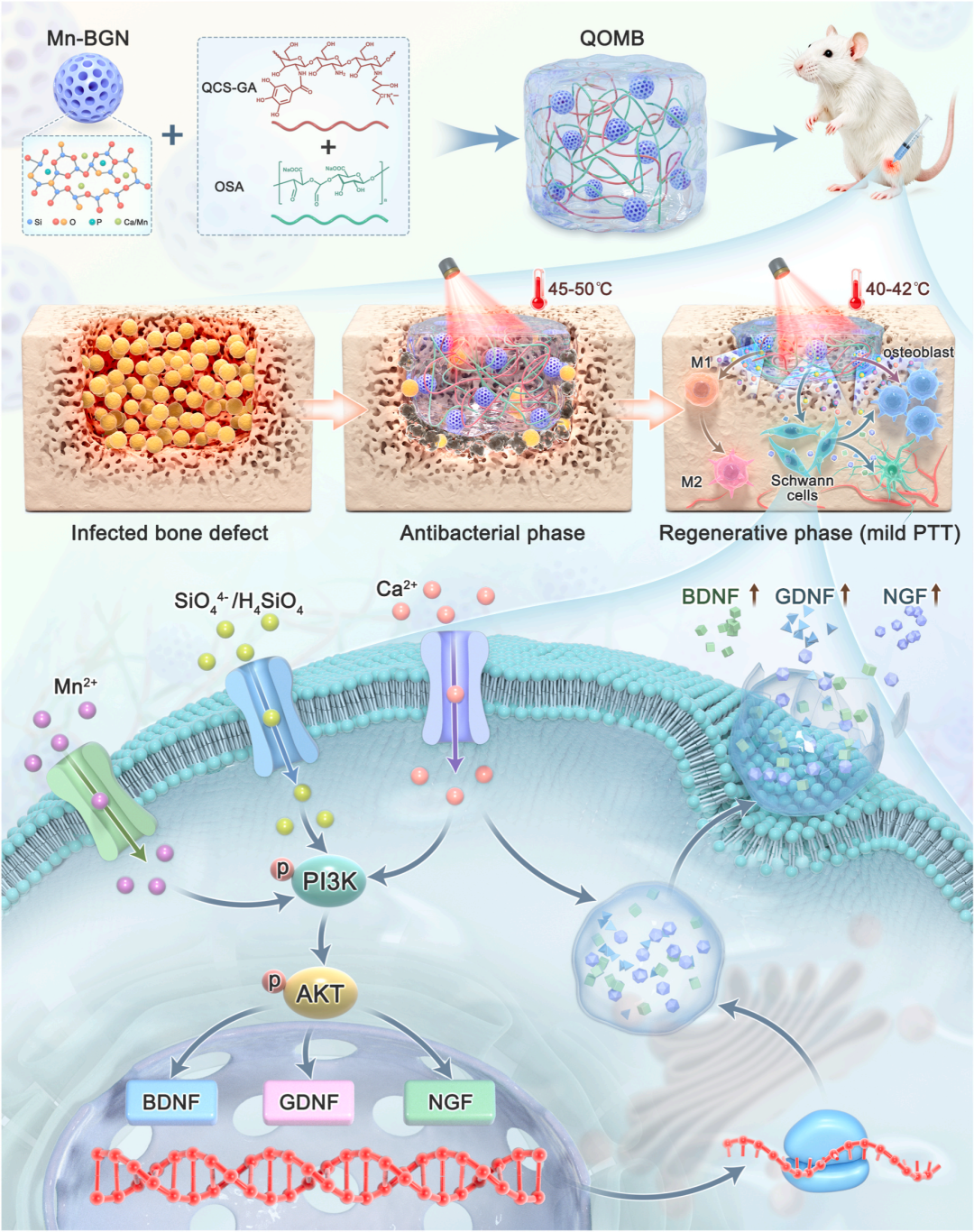
Figure 1
Schematic illustration showing the fabrication process of the QOMB hydrogel and its temporally coordinated therapeutic strategy for infected bone defects. Mn‑BGN, QCSG and OSA are assembled into the QOMB hydrogel via dynamic Schiff‑base crosslinking. After implantation, hyperthermic PTT is first utilized for rapid bacterial elimination. At the subsequent stage, near‑infrared irradiation under mild heating triggers the release of Mn²⁺, Ca²⁺ and SiO₄⁴⁻ from Mn‑BGN. These ions promote macrophage polarization toward a reparative phenotype and activate the PI3K/AKT signaling pathway in Schwann cells. The resulting enhanced secretion of neurotrophic factors establishes a Schwann‑cell‑mediated neurotrophic paracrine microenvironment to support nerve repair and osteogenic regeneration.
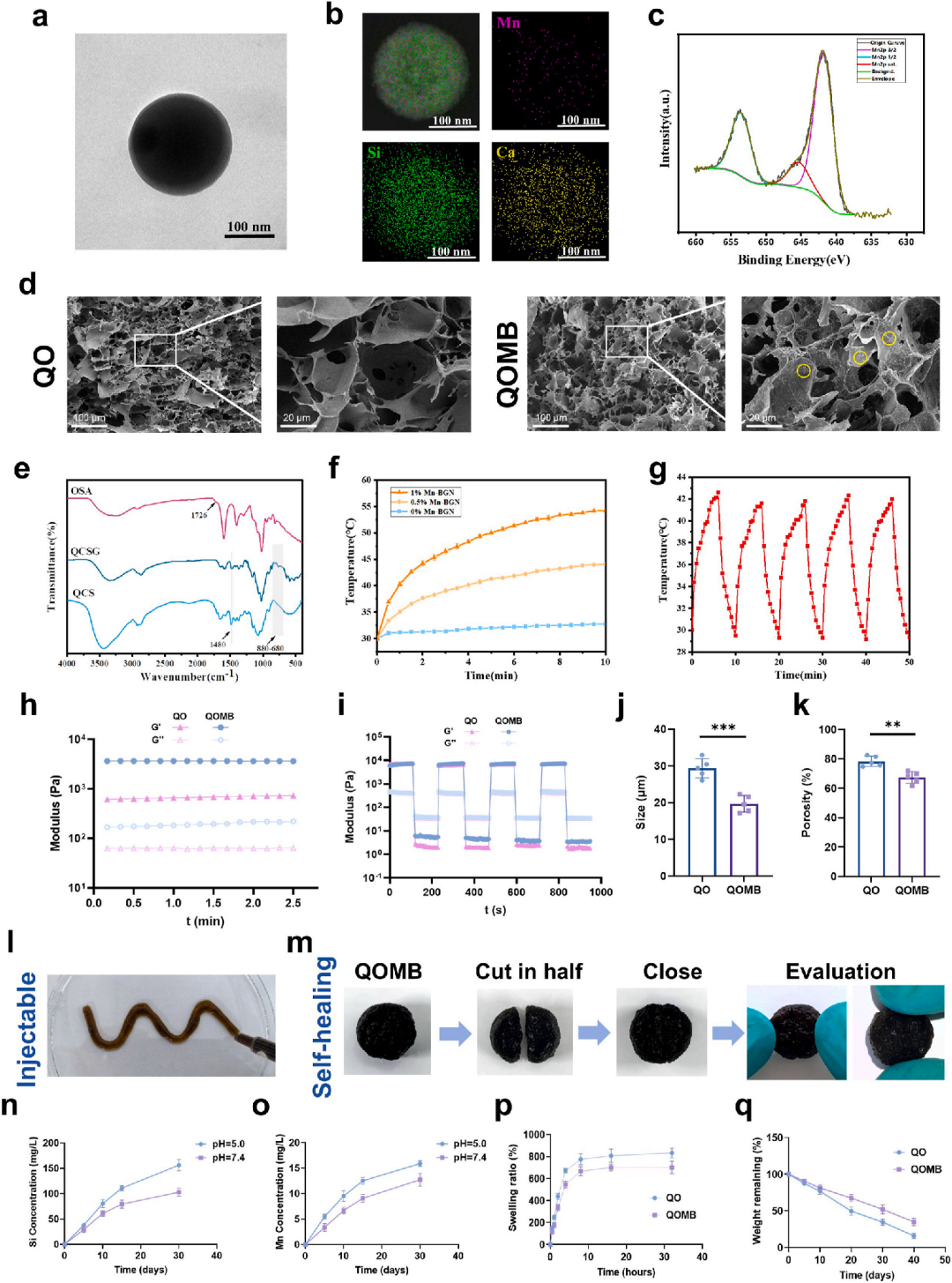
Figure 2
Preparation and characterization of Mn‑BGN and QOMB hydrogels. (a) TEM image of Mn‑BGN. Scale bar: 100 nm. (b) TEM elemental mapping of Mn‑BGN. Scale bar: 100 nm. (c) XPS spectra of Mn‑BGN, showing the valence state of manganese. (d) SEM images of QO and QOMB scaffolds. (e) FTIR spectra of QCS, QCSG and OSA. (f) Temperature elevation profiles of QOMB hydrogels with different Mn‑BGN contents under near‑infrared irradiation. (g) Photothermal cycling performance of QOMB hydrogel containing 0.5% Mn‑BGN. (h) Time‑sweep rheological profiles of QO and QOMB hydrogels. (i) Step‑strain rheological analysis demonstrating the self‑recovery of QO and QOMB hydrogels under alternating low and high strain. (j, k) Comparison of pore size and porosity of QO and QOMB hydrogels (n = 5). (l) The hydrogel can be injected through a syringe. (m) Self‑healing behavior of the hydrogel after cutting and rejoining. ICP‑OES analysis of the cumulative release concentrations of (n) Si and (o) Mn. (p) Swelling curves and (q) degradation curves of QO and QOMB hydrogels. Data are presented as mean ± SD, **p < 0.01, ***p < 0.001.
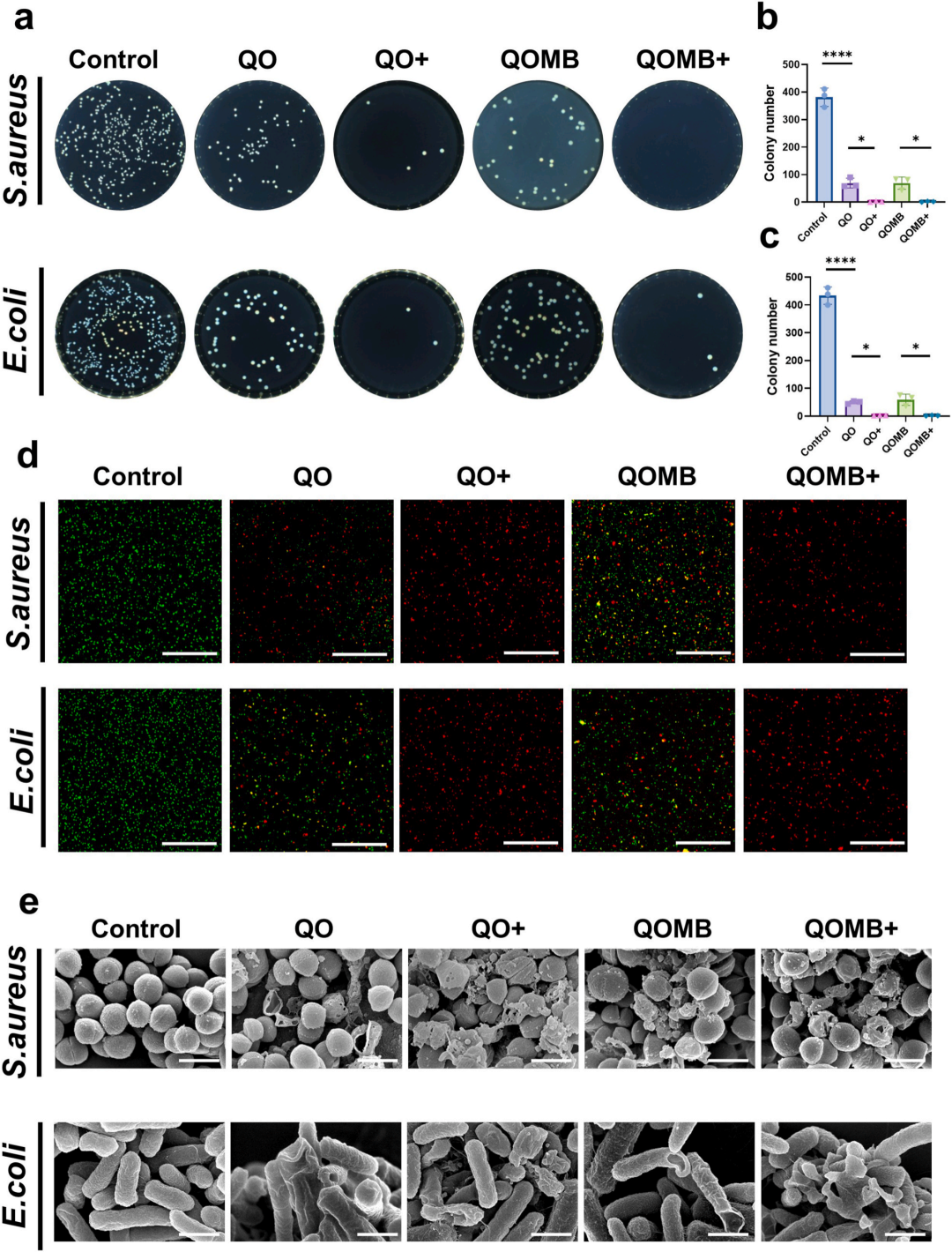
Figure 3
Antibacterial evaluation of the hydrogels. (a) Representative colony images of Staphylococcus aureus and Escherichia coli under different treatments. Colony counting of (b) Staphylococcus aureus and (c) Escherichia coli with various treatments (n = 3). (d) Live/dead staining of Staphylococcus aureus and Escherichia coli colonies in different groups. Scale bar: 100 μm. (e) Representative SEM images of Staphylococcus aureus and Escherichia coli upon different treatments. Scale bar: 1 μm. Data are presented as mean ± standard deviation (SD), *p < 0.05, ****p < 0.0001.
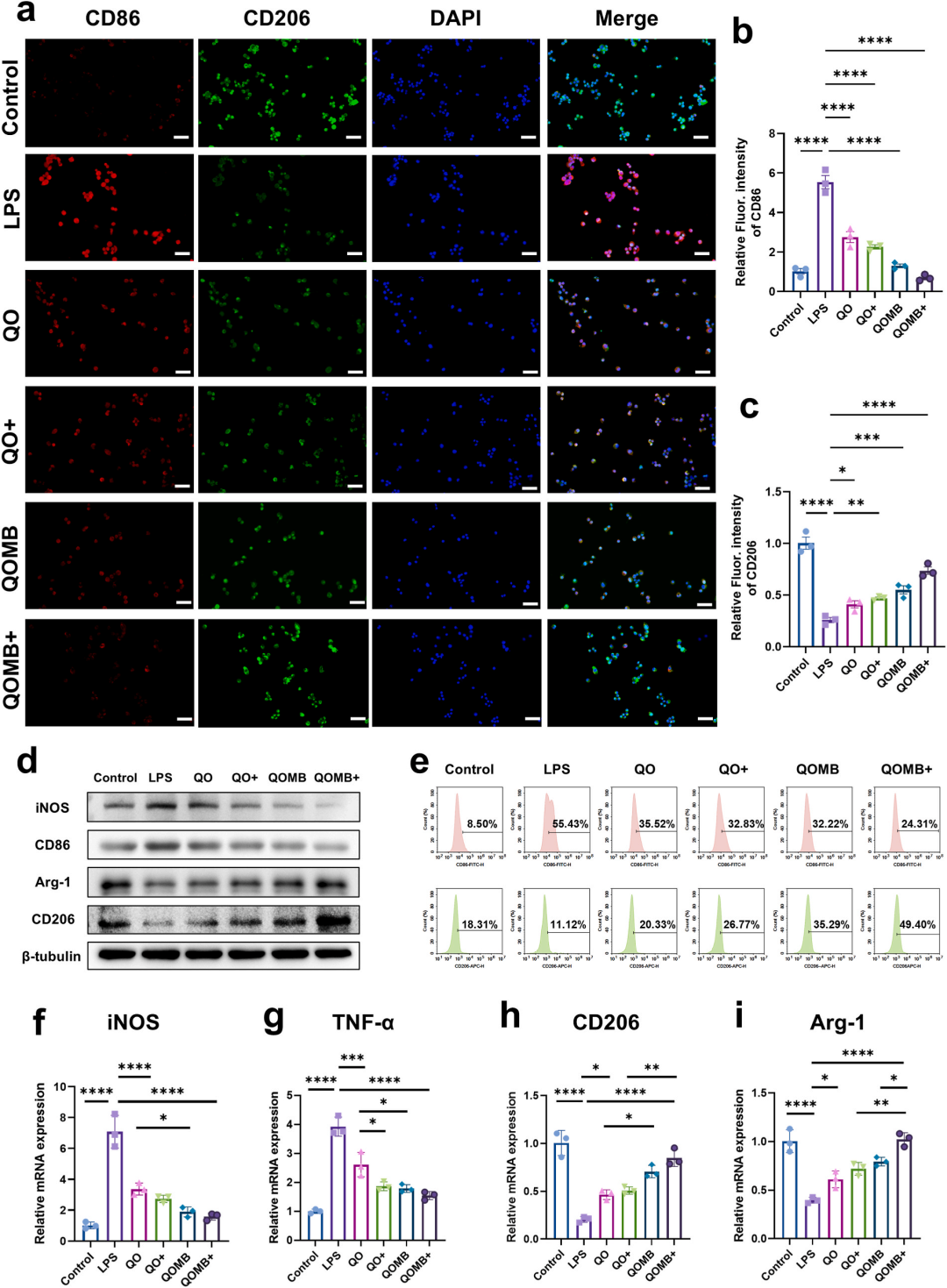
Figure 4
In vitro immunomodulation and macrophage activation by different hydrogels without near‑infrared irradiation. (a) Fluorescence images of CD86 and CD206 (red: CD86, green: CD206, blue: DAPI). Scale bar: 50 μm. (b) Relative fluorescence intensity of CD86 and (c) CD206 staining (n = 3). (d) Western blot analysis of the protein expression of CD86, iNOS, Arg‑1, CD206 and β‑tubulin after 2 days of culture. (e) Flow cytometry of M1 and M2 macrophages in RAW 264.7 cells. RT‑qPCR analysis of mRNA expression levels of (f) iNOS, (g) TNF‑α, (h) CD206 and (i) Arg‑1 in RAW 264.7 cells after 2 days of different treatments (n = 3). Data are presented as mean ± standard deviation (SD), *p < 0.05, **p < 0.01, ***p < 0.001, ****p < 0.0001.
Bioactive Materials (IF 23.6)
Publication Date: 2026-11-06
DOI: 10.1016/j.bioactmat.2026.10.039
We specialize in custom nano-medical functional materials. We conduct targeted development to tailor structure, particle size and surface modification for your experiments. Full characterization, iterative optimization and technical support are available for targeted delivery, bioimaging and nanomedicine studies. Send your evaluation plans to us.
Engineer Zhang: 17715390137
Engineer Chen: 18914047343