

 Academic Frontier
Chemical Society Reviews | Applications of Nucleic Acid Nanotechnology in Tumor Microenvironment Research: From Illumination to Enhancing Immunotherapy Interventions
QQ Academic Group: 1092348845
Detailed
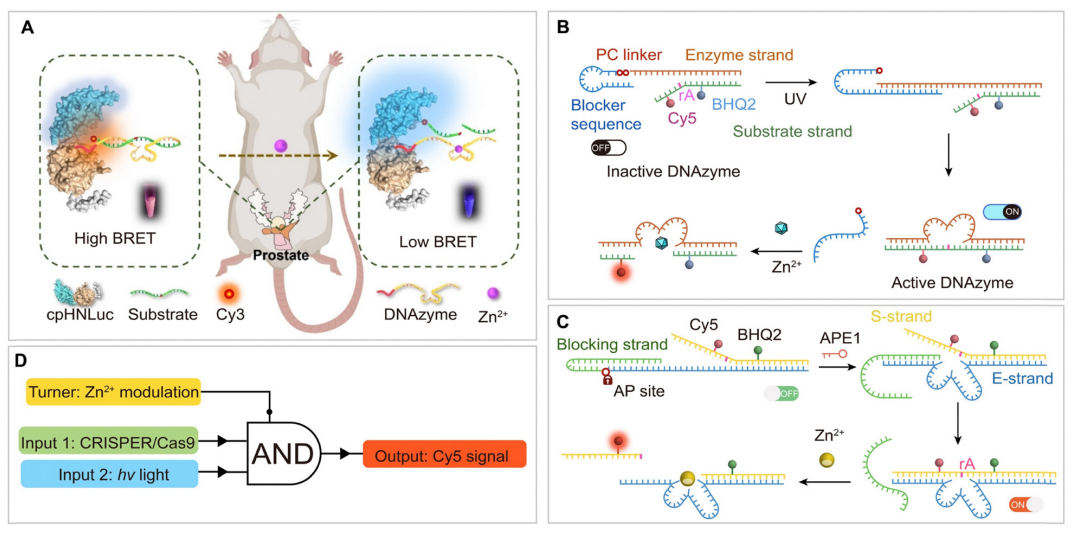
Nucleic acid nanotechnology has become a transformative tool in tumor research due to its multiple unique features, including excellent programmability and biocompatibility. Its ease of synthesis and chemical modification, versatility as probes for both nucleic acid and non-nucleic acid targets, and compatibility with signal amplification strategies make nucleic acid nanostructures ideal candidates for biosensing applications. To date, nucleic acid nanotechnology has been successfully applied to the precise detection and monitoring of tumor biomarkers at various biological scales. Additionally, engineering techniques for sensory and tunable nucleic acid nanostructures have facilitated breakthroughs at the single-cell level, promoting the illumination and reprogramming of the tumor microenvironment (TME), thereby advancing tumor diagnosis and therapeutic decision-making. Framework nucleic acids (FNAs) have also shown promise in immunomodulation, offering new strategies for fine-tuning immune responses in cancer immunotherapy. This review highlights the role of nucleic acid nanotechnology in non-invasive imaging and biomarker analysis of the TME, focusing on innovative approaches to enhance detection sensitivity and real-time monitoring. Moreover, it discusses the advantages and potential applications of nucleic acid nanotechnology in cancer immunotherapy. Through an in-depth exploration of these advancements, this review aims to reveal the pivotal role of nucleic acid nanotechnology in deciphering and modulating the TME to improve oncological therapeutic outcomes.
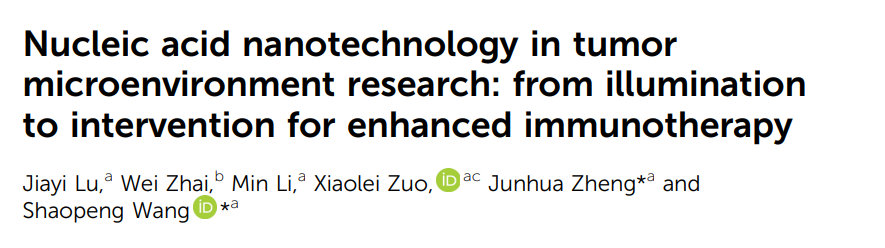
In recent years, nucleic acid nanotechnology has become a transformative tool in the field of cancer research due to its high programmability, excellent biocompatibility, and flexible signal amplification capabilities.The tumor microenvironment is a complex ecosystem composed of cancer cells, immune cells, stromal cells, and others, playing a key role in tumor initiation, progression, and metastasis.
Reference News:
DOI: 10.1039/d5cs00602c
- Previous: IF: 13.3! Temporal reg
- Next: Advanced Science | Imm


